Cinematography School
Theory, technique & visual craft for the independent filmmaker.
CHAPTER EIGHT
On-Set Workflow & Communication
The cinematographer’s craft is not just technical — it is diplomatic. Your job.
The DP-Director Relationship
The relationship between the director of photography and the director is the most important creative partnership on a film set. The director has the vision; the DP has the tools to realize it visually. This relationship works best when built on pre-production collaboration, shared visual references, and mutual trust.
The location scout is where this partnership begins in earnest. Walk every location together, discuss blocking, identify where the light comes from at different times of day, and talk about the emotional arc of each scene in that space. Take photos and videos. Note power outlet locations, ambient sound issues, and potential obstacles.
A lookbook is a visual document — a collection of reference images, film stills, paintings, and photographs — that establishes the visual language of the project. The DP and director build this together. It aligns everyone on tone, color palette, lighting style, and compositional approach before a single frame is shot.
Develop a shared visual vocabulary. When the director says "I want this to feel cold and alienating," you should both know what that means in concrete terms: cool color temperature, hard side light, wide lens, negative space, static camera. The more specific your shared language, the fewer misunderstandings on set.
Shot Lists & Safety
A shot list is the cinematographer’s battle plan. It specifies every shot in each scene: shot size (WS, MS, CU), lens, camera movement, angle, and any special notes. A thorough shot list, built collaboratively with the director, eliminates on-set indecision and keeps the day on schedule.
Organize your shot list by setup, not by script order. A setup is a camera position — every time you move the camera and lights, that is a new setup. Group all shots that can be captured from the same position together. This minimizes lighting changes (the most time-consuming part of the day) and maximizes the number of shots you can achieve.
Safety is non-negotiable on set. Key protocols include: never rig a light without proper safety cables or chains; always sandbag light stands and C-stands (especially outdoors); announce "striking" before turning on bright lights to protect eyes; ensure all electrical connections are safe and not overloading circuits; keep fire extinguishers accessible when using any open flame or hot lights.
Call out hazards proactively. If a cable is a tripping hazard, tape it down or reroute it immediately. If a stand is unstable, sandbag it or reposition it. The DP is responsible for the safety of the lighting and camera departments — take this seriously.
Data Management
Digital footage is fragile. A dropped hard drive, a corrupted card, or an accidental format can destroy an entire day’s work — work that can never be recreated. Data management is not glamorous, but it is sacred.
The 3-2-1 rule is the industry standard: maintain at least 3 copies of your footage, on at least 2 different types of media, with at least 1 copy stored off-site (or in the cloud). On set, this means: copy the camera card to a primary drive, then to a backup drive, then verify both copies before formatting the card.
Never format a camera card until the footage has been verified on at least two separate drives. Verification means not just checking that the files transferred, but opening and scrubbing through the clips to confirm they play without errors. Checksum verification (using software like Silverstack, Hedge, or the free DaVinci Resolve clone tool) provides mathematical certainty that the copy is bit-for-bit identical to the original.
Label everything clearly: drives, cards, folders. Use a consistent naming convention that includes the project name, date, camera, and card number. A DIT (Digital Imaging Technician) handles this on larger productions. On indie sets, the DP or a designated crew member must own this responsibility. There is no second chance with data.
Arrive before the director. Leave after the director. Know your gear so thoroughly you can troubleshoot in the dark. The DP who is calm when everything goes wrong is the one who gets called again.
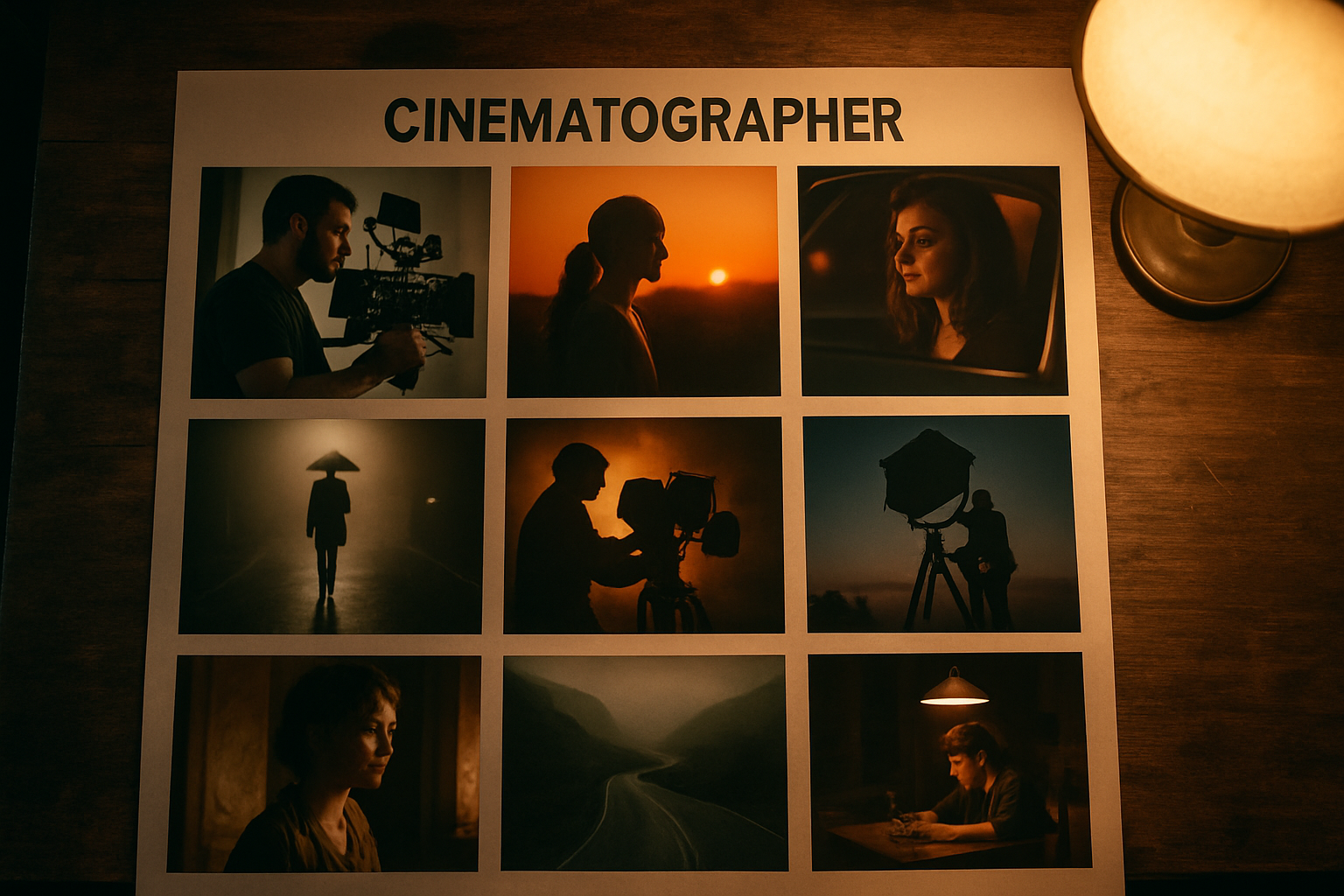
Lookbook — shared visual vocabulary before shoot day
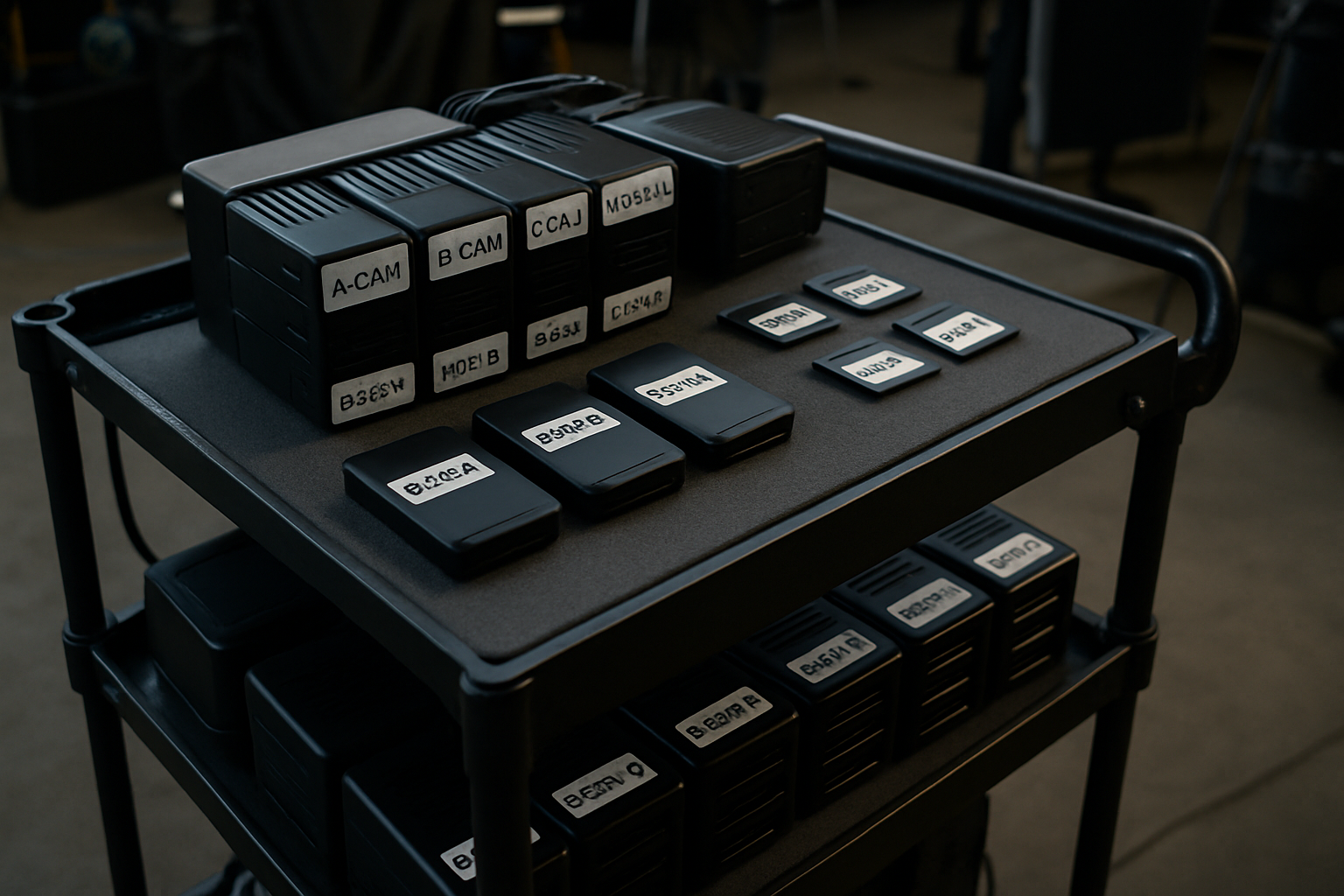
3-2-1 rule — three copies, two media, one off-site