Cinematography School
Theory, technique & visual craft for the independent filmmaker.
CHAPTER ONE
The Language of Light
Light is not decoration. It is argument. Every cinematographic choice — where a.
Quality of Light (Hard vs. Soft)
Light quality refers to the hardness or softness of the shadows it casts. Hard light comes from a small, distant, or focused source — the sun on a clear day, a bare bulb, a Fresnel with no diffusion. It produces sharp, defined shadows with clear edges. Hard light is dramatic and unforgiving: it reveals every texture, wrinkle, and imperfection. It creates high-contrast images with strong separation between light and dark areas.
Soft light comes from a large source relative to the subject, or from a source that has been diffused. A window with sheer curtains, a large softbox, or light bounced off a white ceiling all produce soft light. Shadows become gradual, wrap around the subject, and have feathered edges. Soft light is flattering, gentle, and feels naturalistic.
The key variable is the apparent size of the source relative to the subject. A bare 60W bulb three feet away produces moderately soft light. The same bulb 30 feet away produces hard light. A 4×4-foot diffusion frame close to an actor creates beautifully soft light; the same frame across the room has almost no softening effect.
Most cinematic lighting blends hard and soft sources. A hard key light with a soft fill creates a natural look with controlled contrast. Understanding the interplay between hard and soft is the foundation of lighting design.
An overcast sky is the world’s largest softbox. Shoot exteriors on overcast days when you need flattering, even light with no harsh shadows. Clear noon sun? Find shade or diffuse with a 1-stop silk.
Direction of Light
The direction from which light strikes your subject fundamentally changes how the audience perceives that character or scene. Each direction creates a distinct pattern of highlights and shadows that carries psychological weight.
| Direction | Angle | Effect | Common Use |
|---|---|---|---|
| Front light | 0° | Flat, minimal shadow, even | News, documentary, beauty |
| 45° key (Rembrandt) | 45° side/up | Classic triangle shadow on cheek | Drama, portraiture |
| Side light | 90° | Strong texture, half in shadow | Tension, mystery, noir |
| Backlight / Rim | 180° | Silhouette or halo separation | Romance, suspense |
| Top light | Overhead | Sinister eye shadows | Horror, menace |
| Under light | Below | Unnatural, eerie | Horror, comedy exaggeration |
Color Temperature
Color temperature measures the color of light on the Kelvin scale. Lower Kelvin values produce warm, orange-amber light; higher values produce cool, blue-white light. Every light source has a color temperature, and your camera’s white balance setting determines how it interprets that temperature.
When you set your white balance to match your key light source, that source renders as neutral white. Any other sources at different temperatures will show their color cast. This is the basis of mixed-color lighting — intentionally combining warm and cool sources for depth and contrast.
Mixed color temperature adds dimensionality. A warm key light (tungsten at 3,200K) with a cool fill from a window (daylight at 5,600K) creates a natural separation between the lit and shadow sides of a face. This is one of the most common and effective lighting strategies in narrative filmmaking.
| Source | Temperature (K) | Perceived Color |
|---|---|---|
| Candle / flame | 1,800 – 2,000 K | Very warm orange |
| Tungsten bulb | 2,700 – 3,200 K | Warm orange-yellow |
| Sunrise / Sunset | 2,500 – 3,500 K | Golden warm |
| Fluorescent (warm) | 3,000 – 4,000 K | Slightly warm white |
| Noon daylight | 5,500 – 6,000 K | Neutral white |
| Overcast sky | 6,500 – 7,500 K | Cool blue-white |
| Open shade / blue sky | 7,000 – 9,000 K | Cold blue |
“Warm light feels safe. Cool light feels uncertain. Mix them deliberately.”
Three-Point Lighting
Three-point lighting is the foundational lighting setup in filmmaking and photography. It uses three distinct light sources to control illumination, contrast, and separation.
The Key Light is the primary and brightest source. It defines the dominant direction of light and shadow on the subject. Placement is typically 30–45 degrees to one side and slightly above eye level. The key establishes the mood: a hard key creates drama; a soft key creates naturalism.
The Fill Light is placed on the opposite side of the key. Its purpose is to control the shadow density created by the key. A strong fill (close to key brightness) produces low-contrast, flat lighting. A weak or absent fill produces high-contrast, dramatic lighting. The ratio between key and fill — the lighting ratio — is one of the most important creative decisions. A 2:1 ratio feels natural. A 4:1 ratio feels dramatic. An 8:1 ratio or higher feels noir.
The Back Light (also called rim light, hair light, or kicker) is placed behind the subject, aimed at the back of the head and shoulders. It creates a thin rim of light that separates the subject from the background, adding depth and dimension. Without it, subjects can blend into dark backgrounds and the image feels flat.
Three-point lighting is a starting point, not a formula. Many cinematographers use variations: removing the fill entirely, using only backlight and fill, or employing multiple keys for complex multi-subject scenes.
No fill light? Use a white foam-core board as a bounce card opposite your key. Free, effective, and you can feather it to dial in the ratio.
Practical Lights
Practical lights are light sources visible within the frame — table lamps, candles, neon signs, computer screens, streetlights, flashlights. They serve a dual purpose: they motivate the lighting in the scene (providing a logical reason for the light the audience sees) and they add production value by creating depth, color, and visual interest within the frame.
Using practicals effectively means thinking about them as part of your lighting design, not just set decoration. A table lamp in the background provides a warm pool of light that adds depth. A neon sign outside a window casts colored light that sets a tone. A candle on a dinner table motivates the warm, intimate lighting on your actors’ faces.
Practicals often need to be modified to work on camera. Household bulbs may be too bright or the wrong color temperature. Use dimmable smart bulbs or swap in lower-wattage bulbs you can control. Flag or barn-door practicals to prevent lens flares or unwanted spill. The practical you see in frame is often augmented by a hidden film light placed nearby at the same color temperature to boost the level on the actors without blowing out the practical itself.
Great cinematographers use practicals to justify their entire lighting setup. If the audience can see where the light is coming from, the image feels grounded and believable, even when the actual film lights doing the heavy lifting are hidden just off frame.
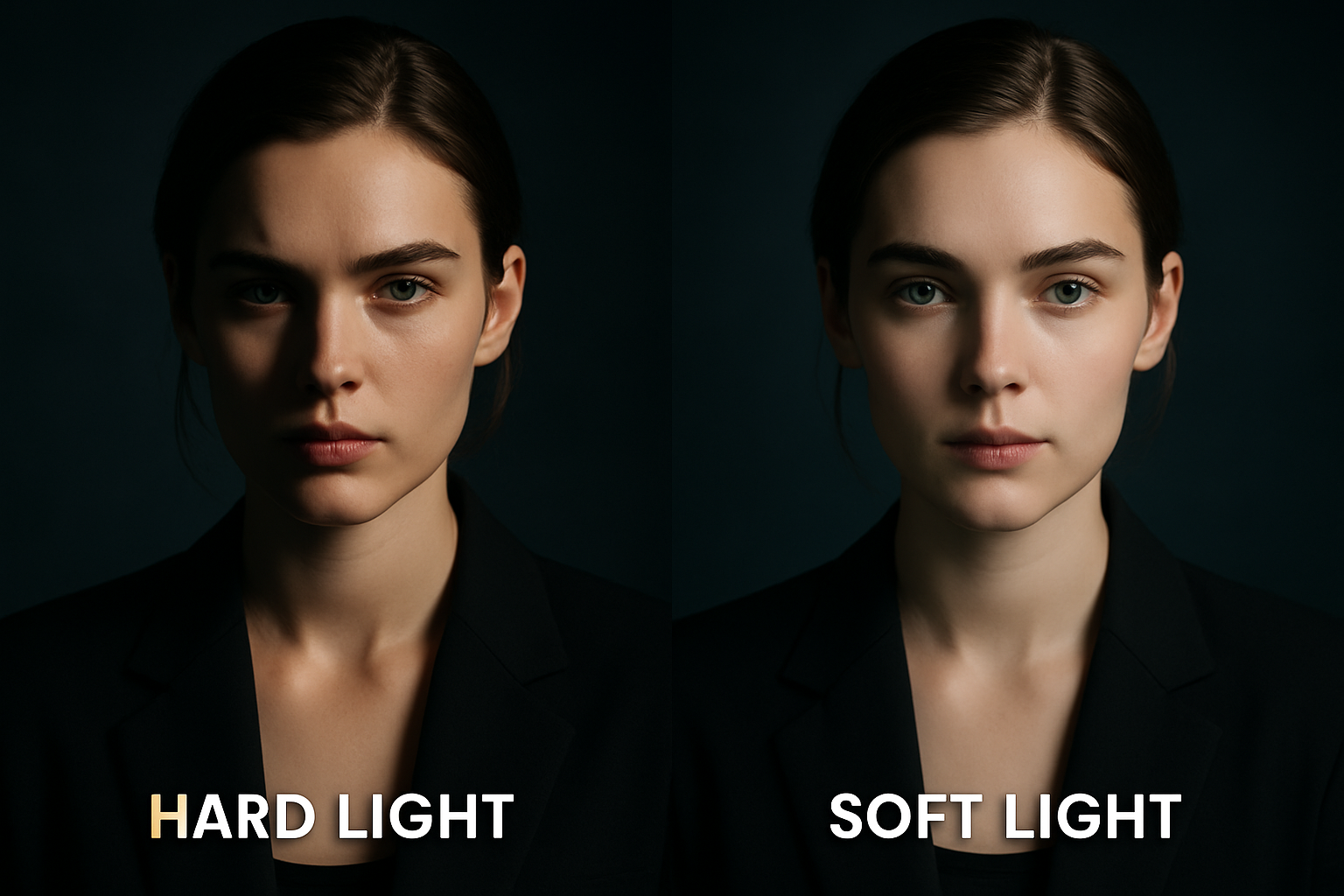
Hard light (left) vs. soft light (right) on the same subject
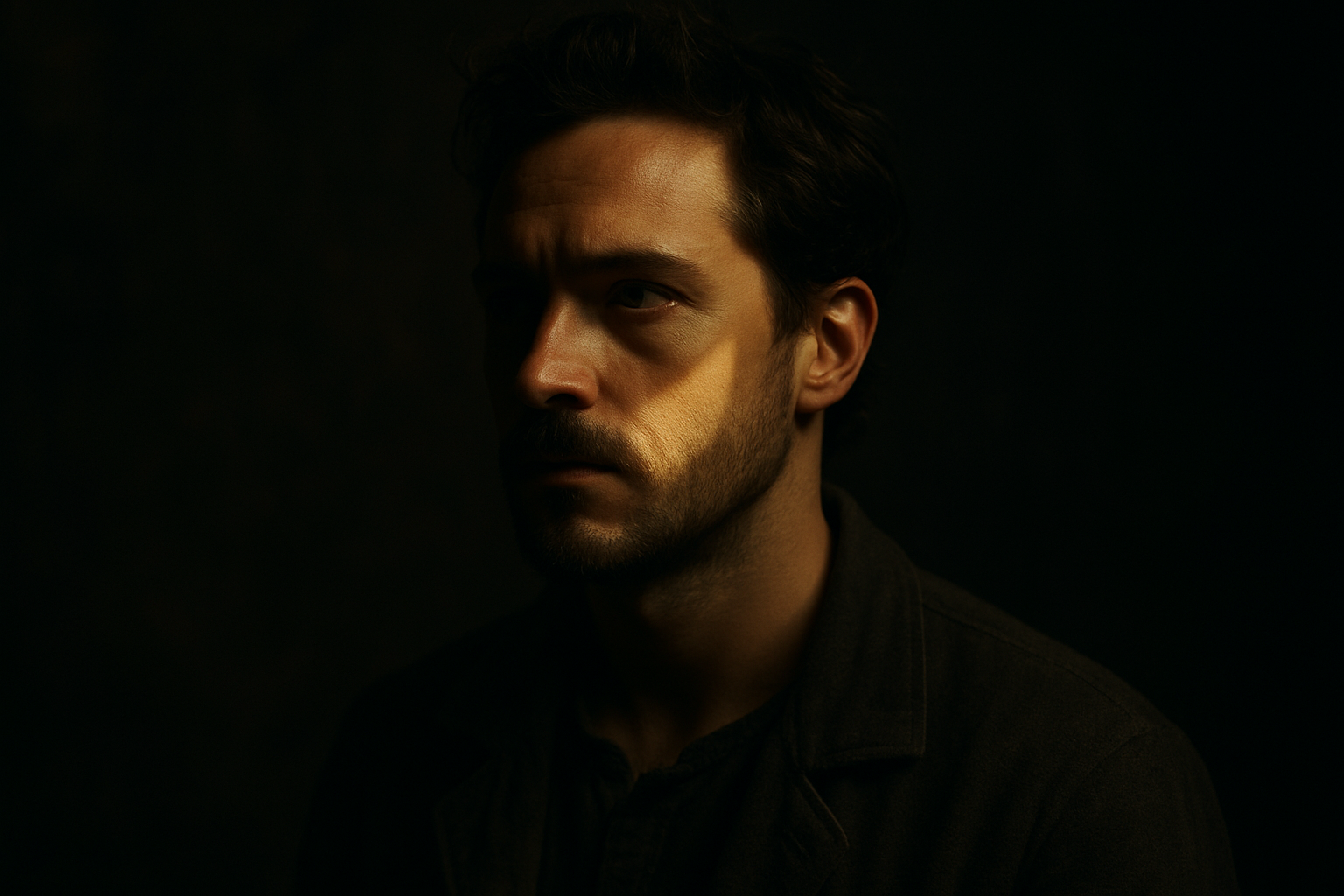
Rembrandt lighting — the signature triangle of light on the cheek